On Feb. 8, football and reggaeton fans alike watched attentively on their TV screens. Along with the Seahawks making it to the Super Bowl, Bad Bunny would make history as the first Puerto Rican to take to the Super Bowl stage. This Grammy award-winning artist made waves through the Latino community with his performance as the first Super Bowl performance entirely in Spanish.
The performance was recorded and broadcast on televisions across America, immersing viewers in a vibrant display of culture and color. It aimed to captivate audiences from start to finish, sparking excitement and emotional highs throughout. Long after it ended, many replayed the performance, searching for hidden symbols and deeper messages woven into every detail.
Bad Bunny made sure to represent his culture and speak to many current issues regarding the Latino community through symbols. His set was a sugarcane field, featuring a Piragua stand, a casita, and dancers wearing pava hats. During his song, “El Apagon,” Bad Bunny climbed on top of a replica electrical pole, protesting institutional neglect in Puerto Rico, where American citizens constantly face the crisis of privatized and unreliable power grids.
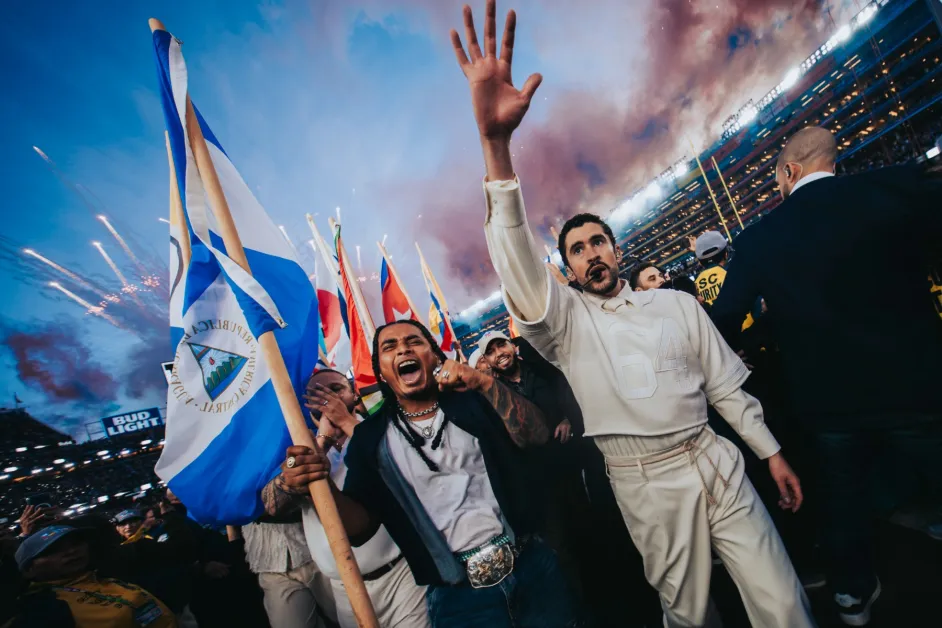
Bad Bunny concluded his set with “Debi Tirar Más Fotos,” one of his most popular and anticipated songs. As he sang about gentrification and preservation of culture, almost fifty Latin flags, including Mexico, Haiti, and Trinidad & Tobago were brought out, representing every country of the Latin diaspora. The flags soared through the air as they marched towards the camera, the message, “THE ONLY THING MORE POWERFUL THAN HATE IS LOVE,” featured on the sign.
With almost 126 million people watching the Super Bowl, the performance reached audiences across America, some superfans of Bad Bunny, and others who had never heard of the artist. Although many across the internet celebrated his performance, it also sparked polarization.
Zakk Fuentebella, a senior musician said that while he “appreciate[s] the message being conveyed, the many different representations being shown, and the worldwide influence the performance had,” that “from a bare bone performance standpoint it wasn’t the best. For the viewers at home the cinematography and choreography was great, but if you paid $6000+ for tickets to see the superbowl and the performance many people at the venue could not appreciate it because many couldn’t see over the tall grass props.” Overall, Fuentebella was appreciative of the message but wished there was an equal focus on the in-person audience as much as the message.
Leah Lackermayer, a junior, gave her opinion considering the politics and controversy leading up to the performance. She said that the online discussions “overhyped the performance to be overdramatic,” with the result being underwhelming for viewers. However, as someone who streamed the performance, she was appreciative of the symbolism and celebration of Puerto Rican culture but believed that “it should have been its own thing,” as the Super Bowl audience seeks more surface-level adrenaline and entertainment, risking the possibility of the nuanced message being buried or looked over.
Senior Amalia Pacleb recalled watching the show with her family. She said that “Seeing diversity represented in mainstream media was really beautiful. I feel like a win for one person of color is a win for all people of color.” Although Pacleb is Asian, watching the representation in Bad Bunny’s performance made her feel seen and represented in a world where people of color often don’t see themselves represented in popular media.