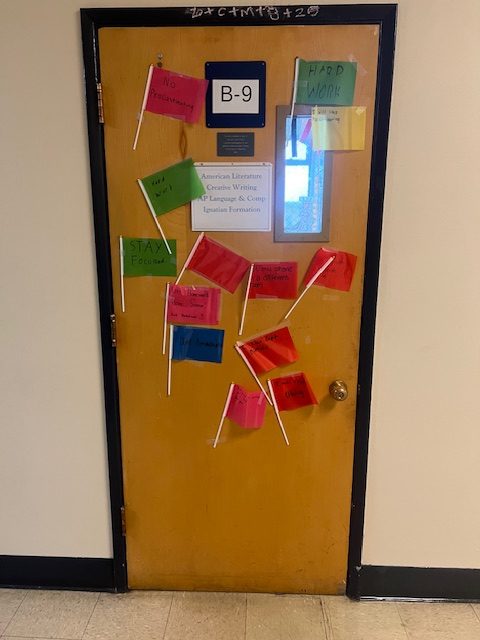
From Oct. 27 until Oct. 31, Bellarmine held a campaign called “Healthy Homework Practices: Homework That Helps Us All Thrive” to instill good habits in its student body and facilitate a mutual understanding between faculty and students. Bringing intention to one’s everyday life allows one clarity, separating one’s actions from the usual everyday habits and practices. The purpose is to take a step back, reflect, and act with a clear vision, so what sparked this communal effort to examine the school’s work?
Jim Dempsey, one of the many faculty behind the scenes, elaborated gracefully, explaining that “It really stemmed out of not last spring, but the spring before when we did a big study with Stanford University.” Led by Professor Denise Pope, Challenge Success is a Stanford University program that examines academic stress and its consequences in student health. Bellarmine has previously held events to promote academic health; most notably, the sleep-focused campaign our school held last spring, which focused on improving the habits and patterns that hold people back.
The study week, however, took a different approach. Instead of simply calling on students to “be better,” the week highlighted a dynamic largely unspoken by calling upon teachers to be mindful of the load they give students. Classrooms held conversations, teachers inquired and students responded, achieving real dialogue and transparency between teachers and students, but have the effects lasted?
A month later, students reflected on the impact of the week. Arshan Aref, senior, said, “I was honestly thankful, I think we got sort of a grace period, and I know that teachers did give more mindful assignments.” When asked if the week left any impact on him, Aref replied, “I remember discussions with teachers, but I still had quite a lot of readings for classes, and even though it did feel a bit lighter, it was just still stressful. I feel like I still have quite a bit of busy work.”
As time moves forward, it’s possible that the week lacked the teeth required to leave a long lasting effect. “I liked the idea of the week, I do think it was nice to have this focus on reflecting on what our homework is and why we have it,” junior Heidi Hallett summarized, ”but I personally feel as if it missed the mark and was just wasted time without a lot of impact on students and teachers.”
Overall, it seems that the general consensus was that students found the week to be helpful, a relatable cause with good intentions, but the week failed to shift student study habits, and according to students: the assignment habits of teachers still feel “same old same old.” Conversation for the sake of progression requires a sense of accountability, not only for teachers to ensure homework is relevant and beneficial, but for students to make an effort in its completion, focusing on its benefits beyond our grade and pursuing a deeper understanding of the material.
Not for nothing, the most important takeaway of the week takes one straight back to what started it: mental health. As winter approaches, finals near, and senior college applications are being submitted, it’s easy to fall behind. With an ever-decreasing amount of daylight, by the time many are finishing with extracurriculars, the day already feels like it’s over. The energy is sapped from all. This is why one’s best interest is to, despite the challenge, allocate time to work so that all have less late-night essays and last minute cram sessions.
One student’s advice: “Give yourself a break. Don’t make it so hard on yourself; just do your homework.”