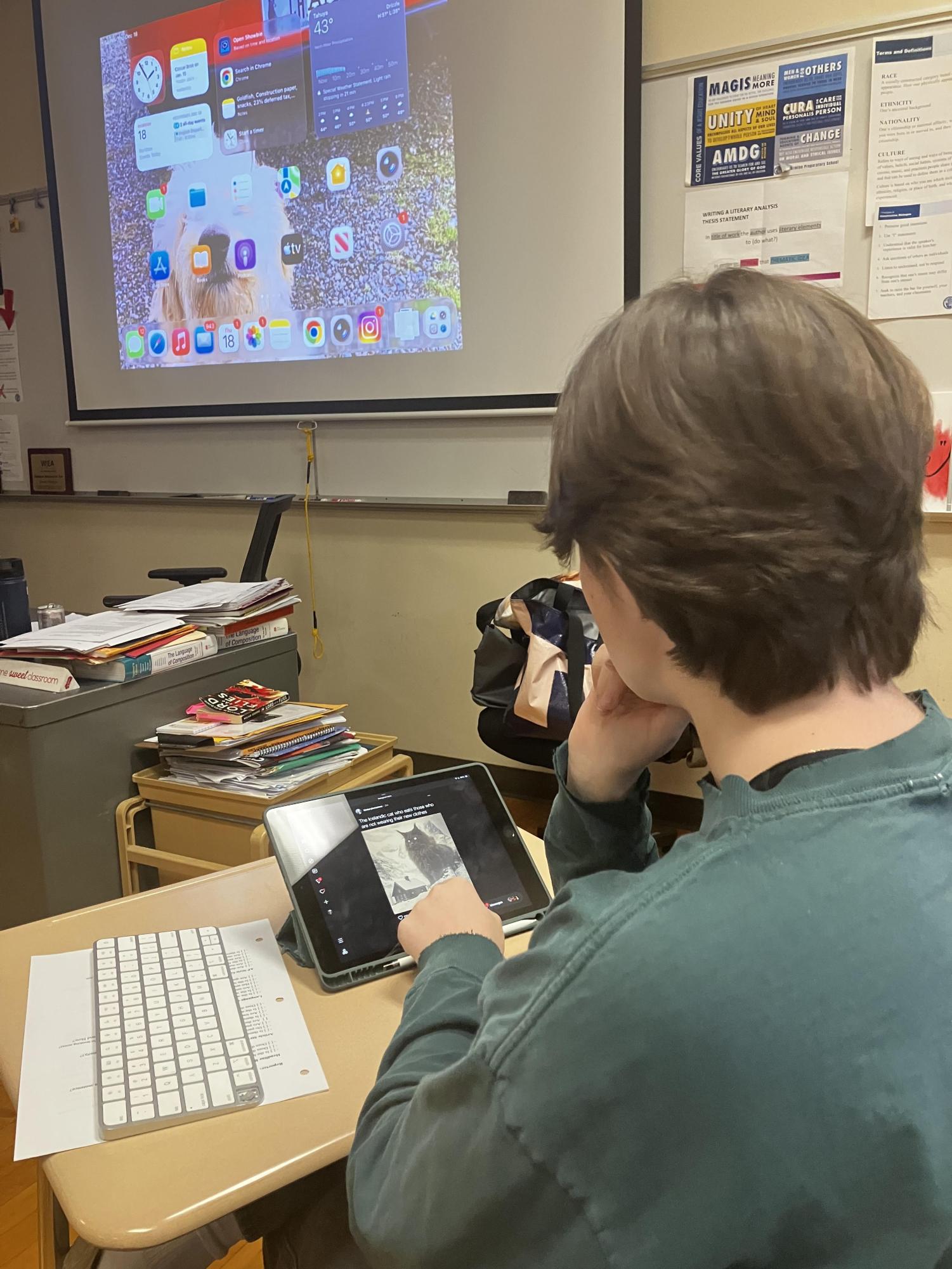
In a day and age where students are glued to their iPads during class time, finding ways to keep teenagers engaged in class can be quite the challenge. As discussed in an October article entitled, “Civic engagement on campus,” teacher Ken Brown’s AP Government class was highlighted for its ability to find new ways to put student interest as the priority.
Earlier this month, Brown was able to do this again, inviting yet another congressional member into the classroom. Students had the opportunity to ask questions and learn in a personalized way about their government. A class of senior students who are typically entrenched in their technology had all eyes on their guest.
These types of activities are exactly what the preparatory school experience should be based on. The entire point is to prepare students to head not only to college but the real world. The question is now how to carry this into more classes. The most common complaint heard in the halls is, “When am I going to use this in the real world?” Although it is often uttered sarcastically, the question does hold merit. How can students be expected to be engaged on what’s going on if they have no contextualization of its value?
This question is not only a problem for teachers to solve, but also for students to contemplate. For students to learn productively they first need to understand how best they learn, and what environment suits them best. Together as a partnership teachers and students can work together to create classrooms to use educational time to the best of their ability, and create the best possible learning environment.