
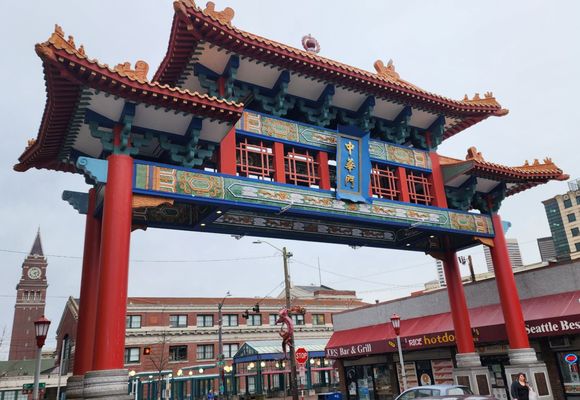
The Chinatown-International District, known as the CID, is the century-old immigrant-built community in Seattle comprising Chinatown, Japantown, Little Saigon, and Filipinotown. It has shaped Seattle history as a colorful, lively cultural epicenter since its establishment. However, present-day policies now pose a challenge that may end the longstanding legacy of Asian success.
As elders stroll through Jackson examining fruit carts, play a game of ping pong at Hing Hay Park, or enjoy dim sum at Jade Garden, a permeating sense of uncertainty lingers through the air as residents increasingly fear for the neighborhood’s long-term survival. Once a bustling immigrant community, many parts of the district have quieted in the wake of crime, homelessness, and gentrification. In the shadows of the T-Mobile Park and Lumen Field, the district resonates with the echoes of neglected voices, displaced communities, and silent resistance.
While in Seattle during the Seahawks parade, senior Alyssa Fisher visited Chinatown. Describing the overall atmosphere of the district, Fisher said “it definitely did not feel like other parts of Seattle… It has a more run down kind of neighborhood feel compared to the urban city feel … It was also full of culture.”
Crime & Homelessness
While Fisher’s observations highlight the district’s cultural richness, they also underscore the stark contrast between Chinatown’s past vibrancy and its current state. The sense of neglect is visible in the empty storefronts, the rise in crime, and the overwhelming presence of homelessness.
Residents struggle daily to meet the needs of displaced individuals while preserving their cultural legacy. For longtime residents and advocates like Tanya Woo, the experience of Chinatown’s slow decline serves as a painful reminder of how institutional oversight and lack of resources have compounded the issues of crime and homelessness in the district.
Woo served on the Seattle City Council in 2024. In an interview with The Fake Food Show, she said, “We have the highest concentration of shelter services here in Chinatown International District. It feels like they kind of pushed everything onto our shoulders in a way without giving us the resources to help people.”
In 2015, the “Nicklesville” tent city was permitted on Dearborn street, right next to Chinatown. Soon after, despite significant community protest, a homeless shelter, the Navigation Center, was also opened in the heart of Chinatown’s Little Saigon neighborhood.
In 2019, the Nicklesville tent city was cleared, prompting the flooding of homeless people into the new Navigation Center located in the center of the neighborhood. By 2022, there were 10 homeless shelters within a mile of Chinatown.
Throughout the time the Navigation Center was in use, the community members continuously rallied and petitioned against it, concerned with increasing crime and safety concerns as more shelter services were instituted into the city.
COVID-19
At the height of COVID-19 in 2020, Asian Americans across the nation faced anti-Asian sentiment and xenophobia, with many Chinatown residents feeling unsafe in the cultural enclave as many feared it became a target for hate crimes and attacks.
Junior Abigail Nguyen recalls how she felt as a Vietnamese-American during the pandemic: “Even though I was young, I understood that the hate crimes against Asians in 2020 were more than just something I heard on the TV. They were real pain affecting real people in my own community.”
Jaden Ramiro, a Filipino-American junior, similarly expanded on how anti-Asian sentiment and hate crimes across the nation impacted him: “I felt like people treated me like a virus.” He further expressed his fear that people would “hate [him]” because he was Asian when he went outside.
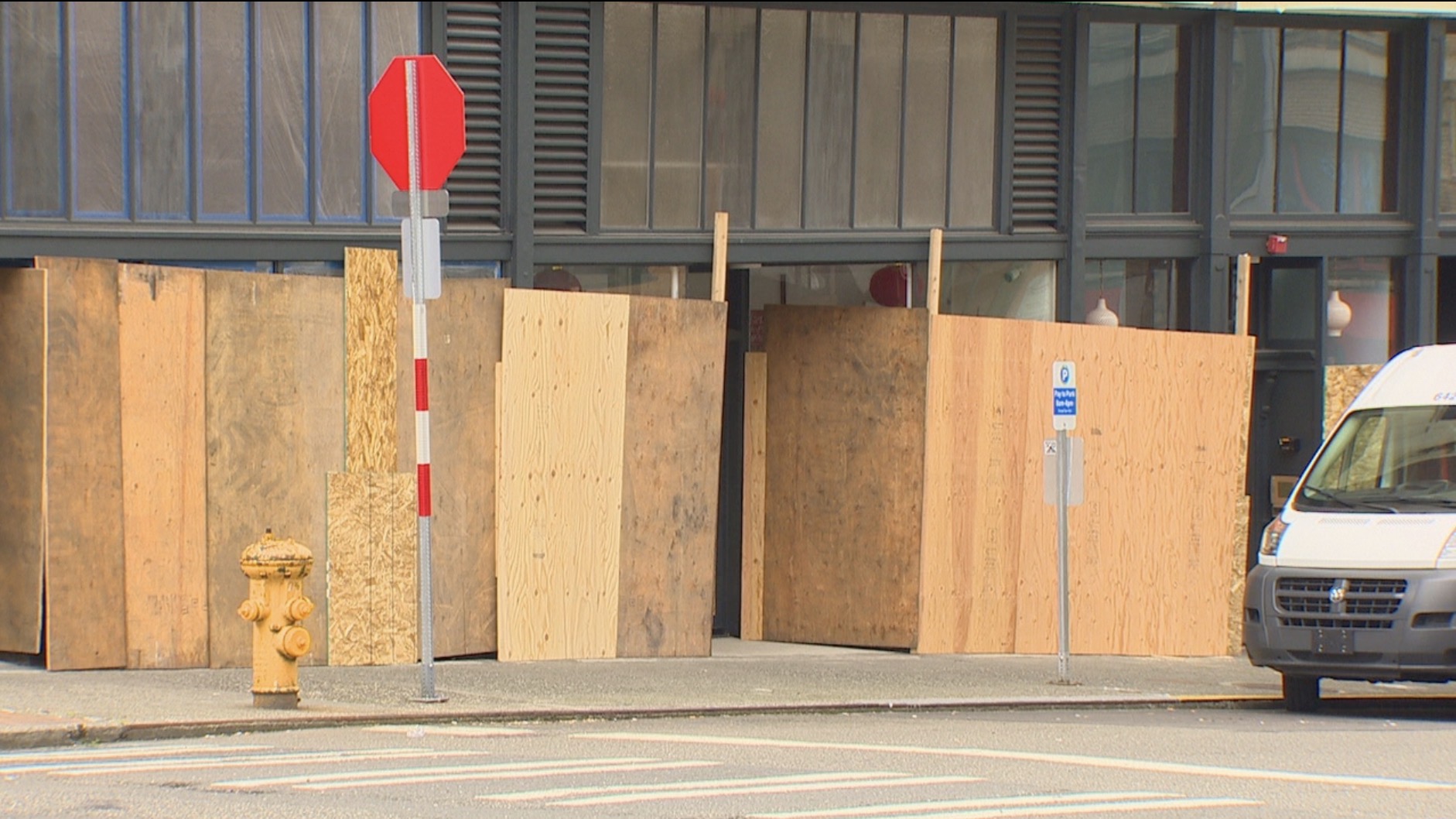
Alongside rising anti-Asian sentiment, the shelter-in-place quarantine orders created opportunities for criminals to burglarize and loot the largely empty businesses in Chinatown.
Many businesses boarded up their windows to protect themselves, making the streets feel closed off and barricaded. Even today, those boards and protective gates remain, lining the storefronts.
Ghost Town
Concentrated homelessness and crime in the CID transformed the district from a thriving hub of commerce and tourism to a quiet ghost town, prompting a mass exodus of local businesses. In 2023, the National Trust for Historic Preservation added the CID to its list of America’s 11 Most Endangered Historic Places.
As a combination of danger, reduced foot traffic, and exorbitant rising rent, cherished local businesses have closed down in sweeping numbers.
According to Northwest Asian Weekly, in 2022, from July to September, nineteen businesses closed in Chinatown, nine among them in Little Saigon, where the Navigation Center was established on 12th Avenue South. With crime, homelessness, and shootings centered in Little Saigon, beloved local businesses Beyond Viet-Wah, Little Saigon Deli, Shabu Shabu Hot Pot, Ten Leaves Bistro, Hue Ky Mi Gia, Sushi Place, Hardwok Cafe, and Seven Stars Pepper had to cease operations.
Little Saigon, once known for its renowned banh mi and tofu, is now known for open-air drug markets, fentanyl use, and violent crime.
Historic Ignorance
These problems only increase the community’s susceptibility to the systemic disregard it has long endured throughout history. In the late 1900s, the construction of highways, parking lots, and two major sports stadiums divided the district, demolishing established businesses and communities in its path. Community advocates hoped to prevent even further expansion, fighting to place Chinatown on the National Register of Historic Places in 1986.
Now, 40 years later, the community is again faced with the challenge to protect the very existence of Chinatown. Recently, Sound Transit’s proposed plan to construct a transit area right through the middle of Chinatown’s 5th avenue, threatened erasure of dozens of historic Asian-owned businesses.
Led by Transit Equity for All, around almost 11,000 supporters advocated for the preservation of Chinatown against Sound Transit’s expansion plans. Through community support, Chinatown residents signed a petition that finally defeated the proposal, but only after the constant plea of thousands of petitions. The dedicated passion of community advocates reflect the community’s desire for representation in city planning decisions.
Looking Ahead
Since its founding, Chinatown residents have resiliently fought against ignorance and systemic oversight. However, in this new era, Chinatown faces new attacks that increasingly overwhelm and pressure residents more than ever before. The district has transformed and deteriorated more in the past couple years than it has in the past hundred years since its foundation. It now faces the risk of erasure.
With Seattle preparing to host matches for the FIFA World Cup 2026 at Lumen Field, the Chinatown-International District sits adjacent to what is quickly becoming some of the city’s most valuable real estate.
As the city continues its efforts to clean up and revamp urban spaces with new visitors, Chinatown finds itself increasingly vulnerable to displacement.
Global attention, tourism, and investment place increasing pressure on neighborhoods like the CID, raising concerns that development will prioritize profit and image over the preservation of long-standing cultural communities.
The story of Seattle’s Chinatown International District is a microcosm of Chinatowns disappearing throughout the nation: in Philadelphia, Washington DC, Los Angeles, Boston, and countless other cities. It is essential to have true representation in governmental decisions and to prioritize equitable planning if we want to ensure that Chinatown is more than another husk of a once thriving community of color, marked only by the historic paifang archway, in five years.