On Nov. 17, Disney Studios released the first trailer for their live action “Moana.” Set to release in July 2026, the movie was advertised to be almost a direct remake of the original, animated movie, and was supposed to stay true to the heart of the original, beloved musical.
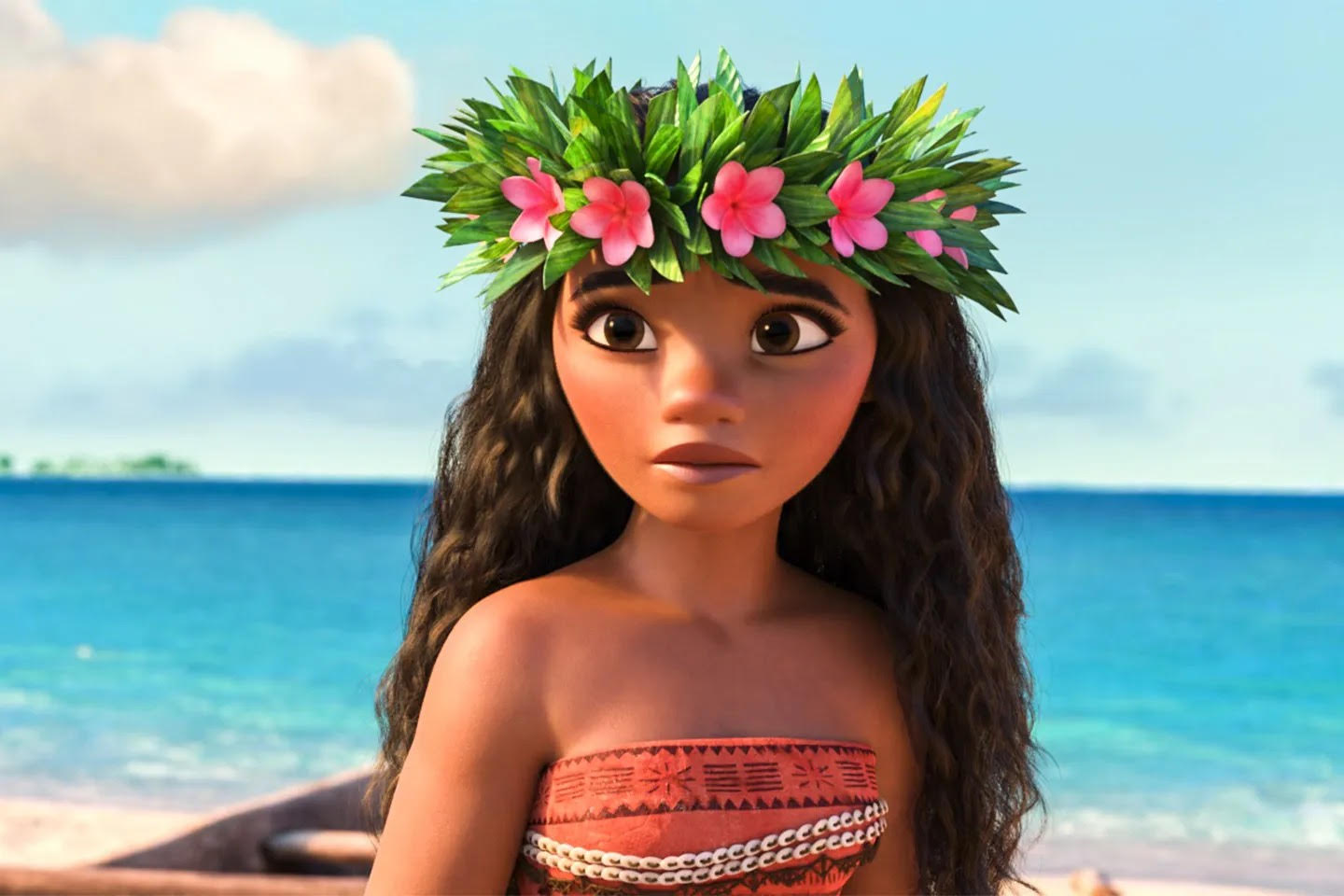
However, when the trailer was released, something struck watchers almost immediately as wrong – Moana’s long, dark curls were replaced with a refined, straight blowout with simple wand curls at the ends of her hair. This struck up backlash almost immediately online – Moana, who was known to be an advocate for young girls of color all over the world and a representative of Polynesian culture, had been taken away.
The largest question circulating the media was simple – why? In the animated cult – classic, Disney went so far as to create a new animation technology, the Disney Bend Model, to animate Moana’s curls more accurately and allow her hair to interact with her environment. Moana’s culture is a central part of her story – the plot centers around ancient Polynesian Wayfinding traditions and mythology like the Demigod Maui, who sports traditional Samoan – inspired tattoos, meaning that Disney went to lengths to make Moana not only intriguing but culturally accurate. The last baffling piece of information was that the actress cast to play Moana, seventeen year old Catherine Laga’aia, has not only curly hair but almost Moana’s exact curl pattern – if the casting was too good to be true, why would Disney go to extra lengths to alter her hair?
Is it easier? Is it “neater” – a phrase that has been used time and time again to call natural hair unruly and unprofessional, but for moviemaking standards can just be a term of efficiency in the way things come across on camera. It could be a need for consistency in shots – curly hair would likely look different every day and at every angle, and is thus harder to control.
But if Disney was willing to spend considerable amounts of time and money facing these same problems in the animating space, why skip out on the real thing?
When asked how the flat ironing of Moana’s hair impacted her as a teenager with curls, junior Grace Morgan replied, “Having curly hair like myself, it’s kind of cool to see other people with curly hair [in movies].” Most other interviewed Bellarmine students agreed on the importance of preserving Moana’s natural hair – “I think the movie is very important when it comes to culture, and I think her hair is a big part of her culture.”
Trevor Czar, also a junior explained, “I think some might say it’s not important – some see it as a small thing like you’re just changing what her hair looks like, but I think it’s pretty important.”
Sophomore Carter Caron took it a step further, relating the topic to all future and past live action Disney movies. ”It doesn’t impact me personally, but I think that with all these live action remakes I think these characters should stay the same and stay central to, like, the original cartoons in the past.” Caron shared. He agreed with Czar that Moana’s “culture is significant” and that “her hair is a big part of that.” However, he also shared that in the end, the issue revolved around “just a kids movie,” and in his opinion, wasn’t that serious.
Although – sophomore Savannah Agee disagreed with most of the above. As a teen with curly hair, she indicated that it wasn’t a big deal either, “It doesn’t impact me,” She asserted, “I don’t know. I mean, it’s a little frustrating, but yeah, not really.”
Hair can be a defining factor of identity, especially for people of color. In an animation space filled of white, blonde and straight – haired Disney princesses, Moana was marked as a historic turn around in the lightly stained racist past of Disney animation – articles at the time called it “A New Hope,” commenting on how it “Breaks Barriers” and “Broke Norms.” Tiana, the only other princess of color at the time, pulled her hair up into a tight bun – so for many, Moana’s long, free locks represented more than just colors on a screen. It meant representation. It meant that Disney was trying. It meant that little girls who looked like Moana would be able to see themselves in her. It was, in the public’s eye, a turning point.
But – movie making is hard. Filming can take years, and when shots don’t work out, they need to be re – done from the same angle, with the same makeup, outfit, and hair. With the unpredictability of curls, there is a stark possibility that Disney had to make a choice – straighten Moana’s hair, or have continuity issues in the editing room.
So as the media continues to storm over this issue, one can only wonder – is it that impactful? Does one character’s hair in one movie define the changing of our generation – a need to make things easier, a need to make things cleaner, and a laziness that has attached to all things, not just intellectualism – but art as well?
Or is it simply just convenience?
And is that, still, the easy way out?