After a two weekend-long run, Bellarmine’s Spring Musical closed on March 22 – Though the shows nearing the end of the week packed the house, “Urinetown” garnered little traction with its first few shows and even less from the student body itself.
But why? Could it be that Bellarmine students are simply busy, or the seemingly vulgar content of the show itself? Could it be the crude title – when asked, all ten interviewed students reported that the name of the musical deterred them from attending or participating at first – even those who auditioned for the show. Or could it just be the fact that nobody really knew what the content of the show would be?
The original Broadway run of “Urinetown” won three Tony awards in 2002, including Best Original Score, Best Book of a Musical, and Best Direction of a Musical, and, while the title and synopsis are seemingly indecent, the plot (and archetypes that accompany it) are fairly average: In a society where people have to pay to pee due to a crippling water shortage, a young man named Bobby Strong meets a girl who inspires him to incite a rebellion against the corrupt company keeping the town in poverty – only to learn that the girl he fell for is no other than the daughter of the rich man he is opposing. The musical covers poverty, corruption, and (spoilers, if you ever plan to see the show), in the end, when the rebels win and eventually, due to lack of severity or law, kill the entire cast of characters in their naivety, poses the question: At what point is justice worth the cost?
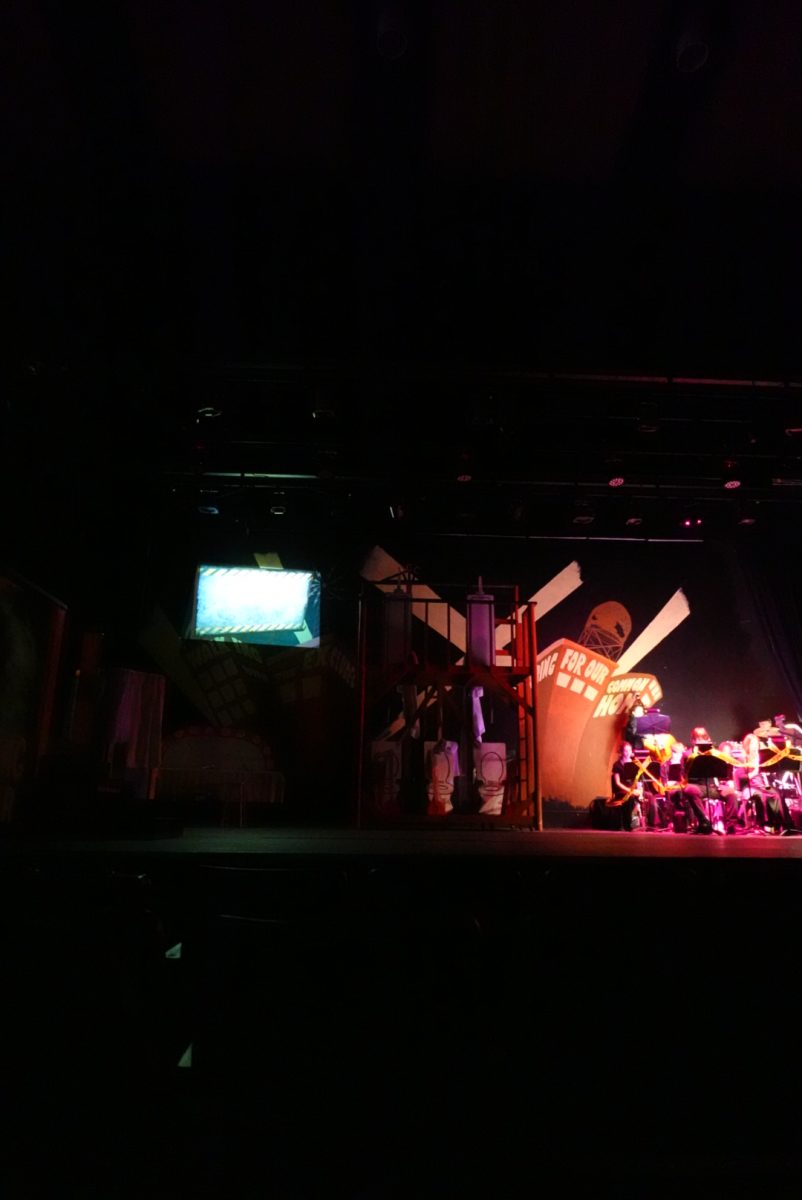
Noticing that the plot covers many of Bellarmine’s core constructs, specifically “walking with the excluded,” our justice summit theme for 2026, Bellarmine Theater’s set design decided to quite literally write the Universal Apostolic Preferences on the set, incorporating the theme onto the buildings and backdrop. When asked if she thought that the show had undertones of the Justice Summit theme and greater Jesuit values, senior Vanessa Pizarro agreed. “I think it shows just some of the errors that can happen in a society that goes from one extreme to another extreme.” Pizzaro explained, “It says a lot about standing with the marginalized in general – like, you can apply it to real world problems and how we are afraid to stand with people who are different from us, and I think it normalized the idea that at the end of the day everyone [ ] is part of one community.”
Junior Julia Tan agreed with Pizarro, saying that the show’s theme was “standing up for people who feel like they can’t usually stand up for themselves.” “I mean the whole show is about helping people you know be recognized and not be exploited,” she stated, “so I think the show addresses that theme very well.”
So a Tony – Award winning musical, with strong ties to Bellarmine’s values and the theme for the week that it was put on, still attracted no interest from the student body of the school it is performed at? Upon being asked why he hadn’t seen the musical yet, senior Arshan Aref replied that he had been “busy all weekend,” – but when asked why he believed his peers hadn’t, he answered that “some people have a negative connotation with the musical. Some people think that it’s weird or something.” Aref then went on to explain, “even though I tried to get my friends to join me – I went to the Shrek one last year – I tried to get more people to join me, but they’re like ‘oh, weird.’’
Junior Jaylee Laxamana, unprompted, replied something similar to Aref when asked the same question, suggesting, ”I think just the stigma behind people being in the play and just like plays in general is lowkey just like something frowned upon – theater and just, like, theater in general.”
Could that be the answer? Do people not want to see the musical because they think that theater – or, specifically, the kids that do theater – are “weird”?
In response to this question, and if he had generally felt hate towards the theater program or the kids in it, Daniel DeWeese, who played Caldwell Cladwell in “Urinetown,” answered, “People are scared of what they don’t know. It’s fear of the unknown. And then when they see something or someone different, they don’t know how to react, they think ‘I don’t know how to handle that’. It’s sad, and as someone who’s experienced a lot of bullying, and I’ve seen a lot of people get bullied, these kids put their heart out into something. It’s no different than other sports when it comes to dedication and time and doing something to expand your skills. Doing something that you love shouldn’t negate you of that freedom.”
Pizarro, who portrayed Old Ma Strong in the musical, also agreed with the prompt, explaining, “I think there’s a stigma around theater kids either being weird or odd. Theater should be a space where people feel free to be themselves, but theater is also so much more than that – it’s also a community where we make art together.”
The concept of theater being an art form that is disliked, not just an extracircular, struck a chord with non – theater kid Annalise Landy as well, when asked why she or her peers had not attended the show. “I think a lot of people have lost their appreciation for the arts and just that sports are a lot more hyped up than productions like this, even though I think they’re just as important,” she asserted.
Thomas Hobson, who played Bobby Strong in “Urinetown,” had something similar to say regarding dislike for the arts. “I think there’s also a heavy stigma against art generally – it goes deeper than just the surface level of just theater. There’s heavy hate on the arts, because they’re expressive. Just because people can be confident enough to express themselves, people are hating,” Hobson acknowledged.
So while the musical still garnered a turn out, addressing not only current issues and delivering a powerful, highly regarded musical performance and message, it left Bellarmine with a different question in mind at the end of the run – do people have negative connotations with the word “theater kid”? Is it them as a group, individuals, or theater as a whole? Or is it bigger than that – are the arts generally disliked because of their expressive quality and in – your – face tendencies? And is there a way to combat that?
One thing is for sure, whether you saw the musical or not: the conversation surrounding art, music, and expression, whatever the medium, needs review.