The Bellarmine Lion functions the same way as other journalism programs at other schools. We pitch ideas, collect quotes, write our articles, and eventually watch as those are published to our online publication. That is, if they make it that far.
When we agree to be a part of the Lion community, we accept the school’s policies and are challenged with the First Amendment right to free speech.
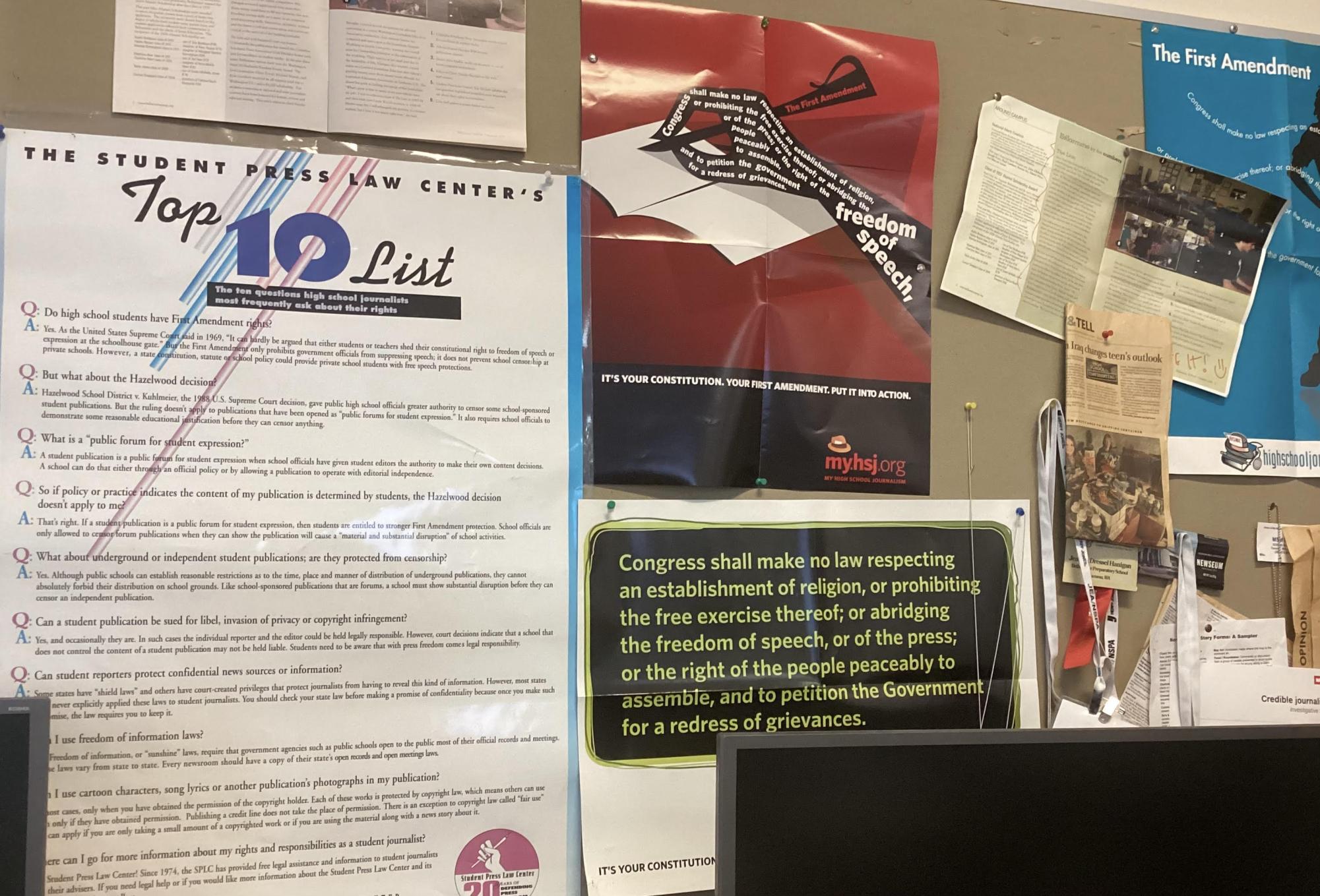
The First Amendment states, “Congress shall make no law respecting an establishment of religion, or prohibiting the free exercise thereof; or abridging the freedom of speech, or of the press; or the right of the people peaceably to assemble, and to petition the Government for a redress of grievances.”(Congress). A very complicated and thorough statement that for the purpose of this article only needs to state that as people who live in the United States, we are able to speak our minds. So why is this not the case for students, especially private schools like Bellarmine?
Public schools fall under government authority and receive federal funding, whereas private schools rely on student tuition and donors. Because of this, private schools have a separate set of expectations.
These expectations extend to the journalism program and what we are able to write about. When topics become controversial, or political, we tend to refrain from covering them. Our journalists realize that what words they write have lasting impacts. If something covered doesn’t appeal to or upsets a group of people, that places the school liable for our words and the consequences that follow.
Journalism teacher Jeanne Hanigan remembers one of her first sessions at a National Scholastic Press Association convention in the late 1990s. “The presenter posed the question, ‘Who here is from a private school?’ If you are, then you and your staff are not protected by the First Amendment.’ I remember being shocked and dismayed. However, I was also reminded and relieved that our journalism staff had such a supportive administration when it came to student voice.”
When a student pitches a potentially controversial article idea, Hanigan does remind the students of their private school status. However, in her mind she is always thinking of ways they could approach the articles. “I consult with a team of professional journalists and educators. This ad hoc advisory board helps me suggest other angles so we can possibly cover a topic.”
Even after hearing from Hanigan, we are left with the question: if we had press freedom to write about more controversial and relevant topics, would our viewer numbers increase? Would we gain support? Or would we lose the paper?
The Student Press Law Centers explains, “As you are probably already aware, you don’t have First Amendment protection from censorship in private schools, so you have to look elsewhere. Reminder: The First Amendment only protects against censorship by government officials; it would not restrict censorship by, for example, the headmaster of a private school” (splc.org).